Commercial Glass Installation in Dallas-Fort Worth: A Business Owner's Complete Guide
A Practical Guide for Dallas-Fort Worth Business Owners.

Commercial glass installation in Dallas-Fort Worth typically runs $50 to $200 per square foot installed for a full storefront system, while single-pane replacement in a sound existing frame usually lands between $500 and $1,000. Most commercial applications require tempered or laminated safety glazing under the International Building Code. Davis Glass Service provides on-site measurement and itemized commercial estimates across the DFW metroplex.
If you own or manage a commercial property anywhere from Fort Worth to Plano, the glass on your building is doing more work than most people realize. It controls your energy costs. It protects your inventory overnight. It is the first thing a customer sees before they ever walk through your door. And when it fails, it fails at the worst possible time.
This guide walks through what commercial glass installation actually involves in the North Texas market. Real numbers, real material options, and the questions worth asking before you sign anything.
What Commercial Glass Installation Actually Covers
Commercial glass is a broader category than most business owners expect. When a glazier talks about commercial work, they are usually referring to several distinct systems that happen to share a material.
Storefront systems. Aluminum-framed glazing, typically running from floor level to roughly ten feet, used across retail, restaurants, medical offices, and small professional buildings. This is the most common commercial glass work in the DFW area.
Curtain wall. A structural glazing system that hangs on the exterior of a building and carries no floor load. You see this on mid-rise office buildings throughout Las Colinas and the Fort Worth central business district.
Commercial entry doors. Full glass or partial glass doors, including ADA-compliant hardware, closers, panic devices, and automatic operators.
Interior partitions and office glazing. Conference room walls, demountable partition systems, and interior storefront used in tenant finish-out work.
Commercial window installation and replacement. Insulated glass units in existing openings, common in older Dallas and Arlington building stock where the seals have failed.
Emergency board-up and glass replacement. Break-ins, vehicle impacts, and storm damage. In North Texas, spring hail is a genuine and recurring driver of commercial glass claims.
A good commercial glass contractor handles all of these under one scope. Splitting the work across specialty vendors is where scheduling problems usually start.
What Commercial Glass Installation Costs in the DFW Market
Cost is the first question nearly every business owner asks, and vague answers help nobody. Here is a realistic breakdown for the Dallas-Fort Worth market.
Single-pane replacement in an existing frame generally runs $500 to $1,000 when the framing system is still structurally sound, and the glass is a standard size. This covers the majority of break-in and impact damage calls.
Full storefront system installation, meaning frame and glass together, is typically priced by square foot. In the current North Texas market, this lands around $50 to $200 per square foot installed, with the spread driven mostly by glass specification and frame depth. A standard aluminum frame with clear tempered glass sits at the low end. A thermally broken frame with Low-E insulated units sits at the high end.
Complete storefront renovations for a small business commonly total $5,000 to $20,000 depending on linear footage and how many entry doors are involved.
By glass type, installed pricing generally breaks down like this:
- Tempered glass for standard storefront applications runs roughly $25 to $45 per square foot
- Laminated glass in equivalent thickness runs roughly $45 to $80 per square foot
- Insulated glass units land around $40 to $90 per square foot
- Low-E coatings typically add 10 to 20 percent over the base glass cost
- Blast-rated and specialty security configurations can exceed $100 per square foot
Those ranges look wide because commercial jobs vary enormously. Two projects with identical square footage can price sixty percent apart based on access, glass spec, and whether the work happens during business hours. When you receive a quote that is dramatically lower than the others, the difference is almost always in the glass specification or the frame system, not in the labor.
Emergency and after-hours service carries its own premium. A temporary board-up on a Saturday night costs more than a scheduled Tuesday morning replacement, which is simply the reality of pulling a crew out for an unplanned call.
Understanding Safety Glass for Commercial Applications
This is the section that saves people money, because choosing the wrong glass for a high-traffic opening leads to expensive rework later.
In commercial settings, certain openings carry a much higher risk of human impact. Glass in doors, glass immediately beside a door, and panels located close to the floor all fall into that category. These are the areas where safety glass matters most, and it is a large part of why commercial work is specified differently than an ordinary residential window pane.
Two materials satisfy the requirement, and they are not interchangeable.
Tempered glass is heat-treated so that it is roughly four to five times stronger than annealed glass of the same thickness. When it does break, it fragments into small blunt granules rather than sharp shards. It is the baseline specification for most storefront glazing and interior partitions.
Laminated glass consists of two glass sheets bonded around a plastic interlayer, most commonly PVB. It also qualifies as safety glazing, and it does something tempered glass cannot: it holds together after impact. The interlayer keeps the pane in the frame, which preserves the security barrier even after the glass is broken.
That distinction matters more than most business owners realize. A standard tempered storefront pane can be breached in under a minute with basic tools. Laminated glass with a 0.060-inch interlayer substantially increases that breach time. For jewelry stores, pharmacies, dispensaries, electronics retail, and anywhere overnight inventory sits in view of the street, laminated glass is worth the premium. Laminated glass also blocks roughly 99 percent of UV, protecting merchandise and interior finishes from fading, and it noticeably reduces sound transmission for offices near highways or under DFW Airport flight paths.
Overhead applications such as skylights and canopies are another place where safety glass is standard practice, since the concern there is falling glass rather than a single point of impact.
For businesses weighing security upgrades against budget, our team at Davis Glass Service can walk your building and specify the right glazing package opening by opening, rather than applying one spec across the entire elevation.
Why Glass Specification Matters More in North Texas Than Most Markets
The DFW climate puts unusual demands on commercial glazing, and a contractor who works primarily in a milder market will underspecify a building here.
Summer surface temperatures on west-facing glass in Dallas and Fort Worth routinely create significant thermal stress. Low-E coated insulated units are not a luxury upgrade in this market. They meaningfully reduce cooling load in buildings where west and south elevations carry large glass areas, which describes most retail construction built in the last thirty years across Irving, Grapevine, and Haslet.
Spring hail is the other factor. North Texas sits in one of the most active hail corridors in the country, and commercial glass claims spike every March through June. Impact-resistant laminated glazing costs more upfront, but for property owners who have filed more than one claim, the math usually works out.
Wind load requirements also vary across the metroplex depending on building height and exposure. A qualified commercial glass contractor calculates glass thickness against the actual wind load for your site rather than defaulting to a standard thickness across every job.
How the Commercial Glass Installation Process Works
Business owners want to know what happens after they call, and specifically how much of their operation gets disrupted. Here is the sequence for a typical DFW commercial glass project.
1. Site walk and field measurement. A glazier measures every opening, evaluates the existing framing system, and identifies ADA, code, and access considerations. Field measurement is not optional on commercial work. Tempered glass cannot be cut or drilled after fabrication, so every dimension has to be correct before the order is placed.
2. Itemized proposal. A legitimate commercial estimate breaks out glass, frame, hardware, labor, and any permit or disposal costs as separate line items. If a contractor cannot itemize the proposal, that is worth noticing. Itemized numbers are also what let you compare two bids honestly.
3. Glass and material ordering. Standard tempered units typically arrive within one to two weeks. Laminated, oversize, and custom coated units run longer, sometimes four to twelve weeks depending on the specification and the supplier. Hardware from manufacturers such as CR Laurence, which supplies much of the commercial glazing hardware used across the industry, is generally faster.
4. Scheduling around your operation. Most commercial work can be sequenced after hours or in phases so a business stays open. Restaurants and retail almost always schedule around service hours.
5. Installation. Small storefront jobs finish in one to two days. Larger or custom systems typically run three to seven days depending on scope, crew size, and weather.
6. Final inspection and cleanup. Sealant cure, hardware adjustment, glass labeling verification for inspectors, and site cleanup.
For a project scope walkthrough on your specific building, the commercial storefront services page outlines what Davis Glass Service handles across the metroplex.
Choosing a Commercial Glass Contractor in Dallas-Fort Worth
Not every glass company that advertises commercial work is genuinely set up for it. Commercial glazing requires different equipment, different insurance, and different code knowledge than residential glass. These are the questions worth asking.
Are you licensed, bonded, and insured for commercial work? Commercial projects carry higher liability exposure than residential. Ask for a certificate of insurance, and confirm the coverage limits actually match your project size.
How long have you worked in this market? Local tenure matters for commercial glass specifically, because permitting and inspection practices differ between Dallas, Fort Worth, Arlington, and the surrounding municipalities. A contractor who has pulled permits in your city already knows what the inspector will look for.
Will you provide an itemized estimate? Line item pricing lets you compare bids honestly and adjust scope intelligently if the number comes back high.
What warranty covers the workmanship, and what covers the glass? These are two separate warranties. Manufacturer warranties cover seal failure and glass defects. Workmanship warranties cover installation. Get both in writing.
Do you handle emergency service? If your storefront is broken at nine on a Friday night, the contractor who installed it should be the one you call. A commercial glass company with genuine emergency response capability is worth more than a slightly lower bid.
What glass are you actually specifying? Ask for the specific product, thickness, and coating. A contractor who answers with "commercial grade glass" and nothing further is not giving you enough to evaluate.
Davis Glass Service works with established manufacturers and suppliers including CR Laurence, whose architectural hardware and glazing systems are used widely across commercial construction, which means replacement parts and matching hardware stay available years after installation.
Common Commercial Glass Problems in Older DFW Buildings
A great deal of commercial glass work in this market is not new construction. It is correcting problems in buildings that are twenty to fifty years old.
Failed insulated glass seals. Visible as fog or haze between panes that never wipes clean. The unit has lost its argon fill and its thermal performance. Individual units can be replaced without touching the frame.
Deteriorated glazing gaskets and sealant. Dried, cracked gaskets let water into the frame system. This is one of the most common sources of commercial water intrusion, and it is frequently misdiagnosed as a roof problem.
Non-compliant glazing. Older buildings sometimes have annealed glass in locations that current code requires to be tempered. This typically surfaces during a tenant finish-out or a change of occupancy, and it has to be corrected before the certificate of occupancy is issued.
Racked or out-of-square frames. Foundation movement is common across North Texas clay soils. When a storefront frame shifts, doors bind, glass takes uneven load, and panes eventually crack without any impact at all.
Obsolete hardware. Discontinued closers, pivots, and panic devices on commercial entry doors. Often the door can be retrofitted with current hardware rather than replaced entirely, which is a meaningful cost difference.
If you are seeing any of these on your property, a commercial glass assessment will tell you which items need immediate attention and which can be scheduled around your budget cycle.
Commercial Glass and Your Building's Energy Performance
Glazing is typically the weakest thermal point in a commercial envelope, and in a market with DFW summers, that has real operating cost implications.
Low-E coatings reflect infrared energy while allowing visible light through, and they can substantially reduce heat transfer compared with standard clear glass. On a west-facing retail elevation, that difference shows up on the utility bill every month from May through September.
Insulated glass units add a sealed air or argon space between panes. Combined with a thermally broken aluminum frame, an IGU package dramatically outperforms the single pane storefront glazing still common in buildings from the seventies and eighties across the metroplex.
Tinted and reflective glass reduces solar heat gain and glare, which matters for west-facing offices and for retail spaces where merchandise sits in direct sun.
For property owners planning a phased upgrade, glazing is usually a better return per dollar than most envelope improvements, because it addresses heat gain, appearance, and security at the same time. A glazier can review your existing commercial storefront glazing and identify which elevations would benefit most from an upgraded glass package.
Related Glass Services for Commercial Properties
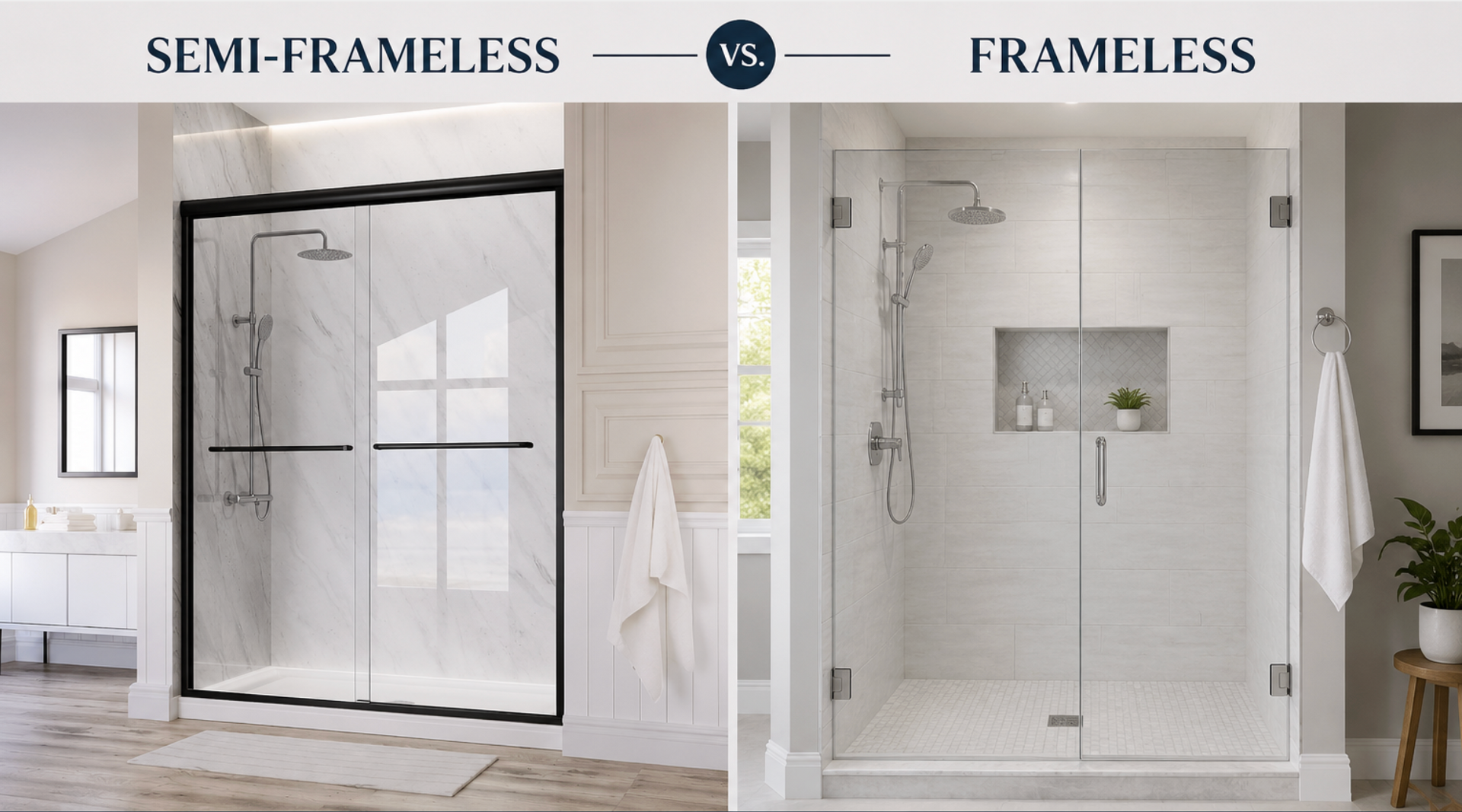
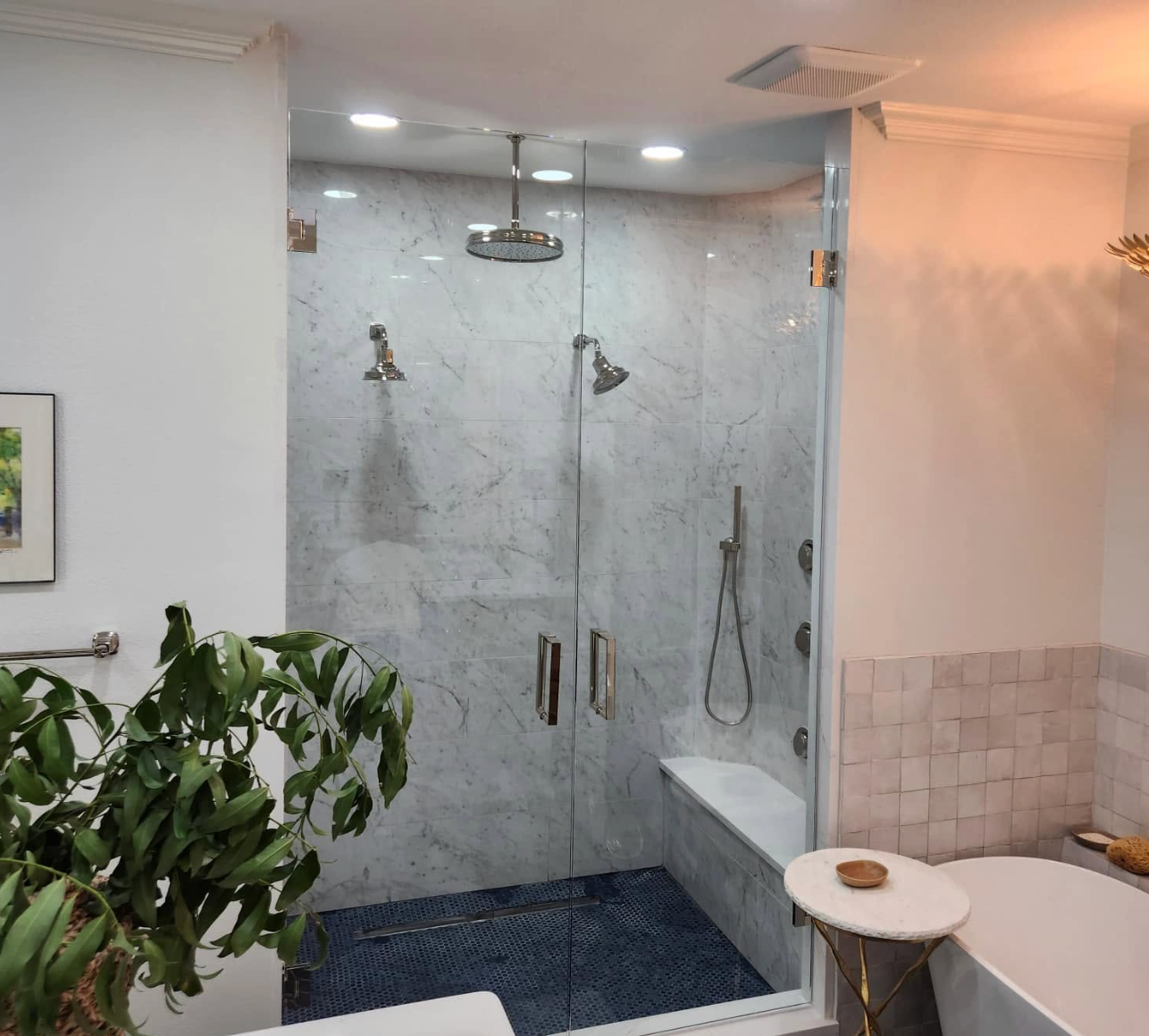
Commercial clients often need work beyond the storefront itself. Interior office partitions, restroom mirrors, display cases, and glass railings for mezzanines and stairs all fall under commercial glazing scope. Hospitality and multifamily properties frequently need frameless shower door and enclosure work alongside their commercial glass, particularly during unit renovations and property refreshes.
Consolidating that work with a single glass contractor simplifies scheduling and keeps hardware finishes consistent across the property.
Frequently Asked Questions About Commercial Glass Installation
How much does commercial glass installation cost in Dallas-Fort Worth?
Commercial glass installation in the DFW area typically runs $50 to $200 per square foot installed for a complete storefront system. Single-pane replacement in an existing sound frame generally costs $500 to $1,000. Full storefront renovations for small businesses commonly total $5,000 to $20,000 depending on linear footage, glass specification, and the number of entry doors involved.
How long does commercial glass installation take?
Most small storefront installations are completed in one to two days. Larger or custom projects typically require three to seven days, depending on size, complexity, and weather. The longer variable is usually fabrication lead time rather than installation. Standard tempered units arrive in one to two weeks, while laminated and oversize units can take four to twelve weeks.
Can you replace just the glass without replacing the frame?
Is tempered or laminated glass better for a commercial storefront?
Both qualify as safety glazing under code. Tempered glass is the standard specification for general storefront applications and costs less. Laminated glass holds together after breaking, which preserves the security barrier and substantially increases forced entry time. Businesses with overnight inventory, high-value merchandise, or street-level exposure generally benefit from laminated glazing despite the higher upfront cost.
Does commercial glass have to be tempered by code?
Commercial glass in hazardous locations must be safety glazing under the International Building Code. That includes glass in doors, glass within roughly 24 inches of a door edge, glass close to floor level, and overhead glazing. Both tempered and laminated glass satisfy the requirement. Annealed glass is not permitted in these locations and will fail inspection.
Does business insurance cover storefront glass replacement?
Many commercial property policies cover glass damage from vandalism, weather, and accidents, though deductibles and exclusions vary considerably between policies. Some carriers require specific glass coverage as a separate endorsement. It is worth reviewing your policy before damage occurs rather than after, and requesting an itemized estimate that your adjuster can process cleanly.
What is the difference between a storefront system and a curtain wall?
A storefront system is a non-load-bearing aluminum-framed glazing system installed between floor slabs, typically spanning up to about ten feet in height. A curtain wall hangs on the exterior face of the building structure and can span multiple floors. A storefront is standard for retail and single-story commercial. Curtain walls are used in mid-rise and high-rise construction.
How do I know if my insulated glass seal has failed?
The clearest sign is fog, haze, or condensation between the panes that cannot be wiped away from either side. You may also see a mineral film or streaking on the interior glass surfaces. Once a seal fails, the unit loses its insulating gas and thermal performance. The individual glass unit can usually be replaced without disturbing the surrounding frame.
Are you ready to get a Commercial Glass estimate for your DFW Property?
Whether you are replacing a single damaged storefront pane, upgrading to laminated security glazing, or planning a full commercial glass package for a tenant finish-out, the right starting point is an on-site evaluation and an itemized proposal you can actually compare against other bids.
Contact Davis Glass Service to schedule a commercial glass consultation or call (817) 859-8435 for an estimate for your property.
Recent Posts
About the Author
Taylor Ann Hancock
Founder of Glass Mama Marketing
I'm Taylor Ann Hancock, founder of Glass Mama Marketing. While I don't install glass or work in the shop, I specialize in researching the glass industry and creating accurate, helpful content for homeowners. I work closely with Richard Davis to ensure every article reflects his experience, craftsmanship, and the way Davis Glass Service serves customers across the Dallas–Fort Worth area.